How to Become a Blogger and Earn Money in India (Complete 2026 Guide)
how to become a blogger and earn money in India: You can become a successful blogger in India by doing five things. Choose a niche that is profitable, create a blog using WordPress.org and affordable Indian hosting, consistently publish SEO-optimized, high-quality content, increase organic traffic via Google, and monetize with Google AdSense or affiliate marketing.
The majority of Indian bloggers make their first Rs1,000 to Rs5,000 in 6-12 months. A full-time blogging salary of Rs50,000 per month or more typically requires 2-3 years of consistent work. This guide will walk you through each step in plain English.
What is Blogging? Who are Bloggers?
Blogging is the act of publishing regularly written material on a website which is also known as a blog to entertain, inform or resolve issues to an audience on the internet. Bloggers are the ones who writes and publishes the content, often in a specific topic known as the niche.
In India blogging has grown into a profession that goes beyond just a hobby. Indian bloggers earn money from their work via a variety of channels, including display advertising through Google AdSense, affiliate commissions from platforms such as Amazon Associates India and Flipkart Affiliate and sponsored content deals with brands as well as sales of digital goods such as e-books and online classes. Bloggers who are salaried work as writers at companies such as Nykaa, Zomato, or digital marketing firms, earning between 15,000 and 60,000 rupees each month, as employee. Other bloggers work as freelance writers through platforms such as Fiverr or Upwork with a pay per post or for a project. The self-hosted blogger who creates their own fan base However, usually is the most lucrative long-term limit of all three routes.
Blogging platforms -mainly WordPress.org, Blogger.com, and WordPress.com permit anyone to post blog posts online with minimal technical skills. Of them, WordPress.org (the self-hosted version) is the standard that is used by the most successful Indian bloggers, which includes Harsh Agrawal, who founded ShoutMeLoud which is one of India’s top-rated blogs, as well as Amit Agarwal, who founded Labnol.org and widely acknowledged as the first professional blogger from India.
The opportunity for Indian bloggers in 2026 is huge. With more than 700 million active users on the internet according to TRAI’s statistics, and a rapid increase in Hindi and regional content consumption The total audience of Indian bloggers is higher than ever before. The areas of personal health, finance technology, education, and health continue to draw high advertising spending, which directly into more money for bloggers working in these areas.
You can even get some inspire from top bloggers in India who are able to achieve desired results.
Here is a complete framework to become a blogger in India step-by-step
5 steps on how to become a blogger and earn money in India

Step 1: Select a Profitable Niche for Your Blog in India (And Validate it Before You Commit).
The niche you choose is the area your blog’s entire content is centered on. Every article you write and every person you draw and every penny you earn is a result of this one choice. Selecting a profitable niche not just an area you like is the difference between a website that makes money, and one that does not.
Topical authority is the indicator Google employs to determine if your blog is an expert in a particular area. A website that has 50 pieces on personal financial matters to Indian student will appear higher and will earn more than a website that posts 10 articles on travel, finance, fitness, cooking, or technology. Niche focus builds authority. Authority is the key to ranking. Rankings drive traffic. Traffic is the key to earning.
The highest-earning niches for Indian bloggers in relation to demand from advertisers and affiliate commission rates include personal financial (mutual funds as well as stock market investment and insurance) as well as health and wellness, software and technology reviews, career and education advice, as well as travelling within India. Google AdSense pays bloggers based on Cost Per Click (CPC) -which is the amount advertisers will pay to get a single click from their ads. The technology and finance niches have CPC rates between Rs10 and Rs50 in India and those in the entertainment or lifestyle sectors may provide only Rs1 to Rs3 per click. The difference in CPC directly affects the AdSense Revenue Per Mille (RPM) that is your income per 1,000 page views.
How do you validate your field before you commit:
Begin by using Google Trends India at trends.google.co.in. Explore your topic of interest then filter the results by India as well as the last 12 months, and then look for a steady or increasing interest in the course of time. A subject whose interest in search reached its peak in the past three years is not a viable option. The topic with constant or increasing search volume is an area worth exploring.
Use a free Keyword research software -for example, Ubersuggest or Ahrefs free version are great for novices to assess the monthly volume of searches for your primary keywords. A keyword that receives fewer more than 1,000 searches per month in India is unlikely to generate significant traffic, even if you are at the top of the page. It is important to choose keywords that have at least 2,000 to 10,000 monthly searches, and a manageable amount of competition.
Open Google Keyword Planner and check the CPC for your primary niche keywords. Niches in which primary keywords have an CPC of Rs10-30 will bring in much more AdSense earnings than niches whose CPC is Rs2-5. A single glance can spare you a whole year of creating a blog in niches that have low earnings.
Then, look at your competition seriously. Find your keyword on Google and look through the first page results. If each result is a reputable publication such as Moneycontrol, Economic Times, or Healthline India with hundreds of backlinks, it is not a good idea for a brand new blog. Instead,
look for a specific sub-niche or angle in your subject. Such a question as “best saving accounts available in India to college students” for instance, or “how to start an SIP investment of the amount of Rs500 per month” is a legitimate search term with a high volume of searches and genuine intent of the reader, and is far less competitive than broad phrases like “investment advice India.” Start with a niche and expanding when you’ve gained credibility is the method that has proven successful for the majority of Indian bloggers.
Which type of blog is best for earning?
From earning point of view there are some potential niches such as finance, niche specific, travel, lifestyle that can make you generate high income.
Ultimately, the type of blog that is best for earning money will depend on your interests, expertise, and the needs and interests of your audience.
It’s important to choose a topic that you are passionate about and can write about in an engaging and informative way.
After finalizing a niche next step is to start building your dream blog and for that let’s move to another part of this article.
Step 2: Choose the Right Blogging Platform — Self-hosted vs. Free in India
It is your platform that forms the basis that your entire blog business is constructed. The platform you choose will determine the amount of money you will earn, the amount of control you have over your design and how sincerely brand partners and advertisers treat you.
Here is a clear review of three major choices for Indian bloggers:
| Platform | Cost | Monetization | Design Control | Best For |
|---|---|---|---|---|
| Blogger.com | Free | Limited; AdSense only | Low | Beginning students experimenting with the concept |
| WordPress.com (free plan) | Free | The platform is restricted; it shows its own advertisements | Low | Writers who are looking for no investment |
| WordPress.org (self-hosted) | Rs1,500-Rs3,500/year | Unlimited — AdSense, affiliates, products, sponsors | Full | Anyone serious about making money |
Blogger.com is owned by Google and only requires an Gmail account to sign up. It is free. However, it has only a limited amount of design flexibility, appears less professional for brands when it comes to sponsored content, as well as being built upon Google’s platformwhich means that the platform can alter its policies or cease operations without notice.
Blogger is an acceptable alternative for those who want to start a blog before making any financial investments. It’s not recommended for those who plan to earn a substantial revenue through their blog.
WordPress.com offers a free plan that comes with a few basic features. It is a significant limitation: the free plan displays WordPress’s own ads on your website as well as restricts the options of monetization and prohibits the installation of third-party plugins. Paid plans begin at around Rs300 to Rs700 per month, and eliminate certain limitations, but WordPress.com as well as WordPress.org are completely different services with different features.
WordPress.org is the self-hosted version of WordPress and is the platform utilized by the majority of the professional Indian bloggers. It is easy to download WordPress’ WordPress software and then install it on a host server that you pay for separately. You have complete control over your blog’s appearance function, performance, and even monetization.
Domain registration is priced between Rs500 and Rs800 annually through companies like GoDaddy India or Namecheap. Hosting with Hostinger India or MilesWeb starts at around Rs69-Rs200 per month for an annual plan. The cost of a professional self-hosted website is around Rs1500 to Rs3500 per yearless than the price of one dinner at a moderately priced restaurant every month, and in trade for an online platform offering unlimited earnings potential.
How can I start a blog for free and make money in India??
You can learn to build free and professional blog easily by reading my article on 8 best blogging sites to earn money in India.
WordPress.org, the self-hosted version is the industry standard in India for professional bloggers. Install the WordPress software on your hosting that you have purchased separately. You can control the design, functionality, and monetization of your blog. Domain registration costs between Rs500 and Rs800 per year. Hosting through providers such as Hostinger India or MilesWeb starts at around Rs69 to Rs200 per month. You can own a blog with unlimited potential for income by investing Rs1,500 to Rs3,500 annually.
If you are an Indian blogger and want to earn money, we recommend that you start with WordPress.org. Hostinger India or MilesWeb. Self-hosted WordPress is a low investment and gives you total control. Many of the Indian bloggers that you admire, from Harsh Agrawal at ShoutMeLoud, to Amit Agarwal at Labnol, use it.

Step 3: Create your blog correctly from Day One
It is no longer necessary to have technical knowledge in order to set up a WordPress Blog in India. Follow these steps if you know how to navigate your smartphone.
Register your domain name. A domain is the address of your blog on the Internet (for instance, yourblogname.com). Register your domain name through GoDaddy India or Namecheap. If possible, choose a.com domain extension as it is the most globally recognized. For blogs that target Indian audiences, a.in domain extension is a good choice. Your domain name should be short, memorable, easy-to-spell, and reflect your niche. Avoid numbers and hyphens.
Buy hosting. The server that hosts your blog files is called the host. Hostinger India offers a single web hosting plan for beginners (approximately Rs69 to Rs99 per month, on a 12-month contract) that is reliable and affordable. You can upgrade your hosting plan to one that is suitable for business or cloud as you grow.
Install WordPress. Most major Indian hosting companies offer an easy one-click WordPress install through their control panels. It takes less than five minutes to do and does not require any coding.
Select a theme that is fast and clean. The theme you choose will determine the look of your blog. Astra and GeneratePress, which are free themes, are popular among professional Indian bloggers. They are lightweight, quick-loading and customizable. Avoid flashy themes that are loaded with animations, as they slow down your website.
Install the essential plugins. The free Rank Math SEO helps you optimize each article for search engines. Indian bloggers prefer this over other alternatives. Akismet will protect your blog against spam comments. W3 Total Cache or WP Super cache improves the speed of your pages. Google Site Kit allows you to connect your blog directly from the WordPress dashboard to Google Analytics, Google Search Console and Google Site Kit.
Install Google Search Console and Google Analytics. Both of these free Google tools will tell you what your blog’s performance is in search results and which keywords are driving traffic to your site. They also show you how readers interact with your website. These tools can be set up right from the start of your blogging career.
The real work begins once your blog goes live.
Step 3) Setup your blog –
Nowadays building a blog does not require much tech knowledge just if you know how to serf internet then you can easily start creating a blog with little guidance.
The process to setup your blog will be quite easy using free platforms, just by filling up some basic info you will have a ready to use blog in your hand.
While Building a professional blog needs some tech knowledge and as well some investment, but it will be worth at the end.
You will also need to choose a domain name and select a template or theme. Your domain name should be catchy, memorable, and reflective of your niche.
The template or theme you choose should be visually appealing and easy to navigate. You should also consider setting up key features such as an email opt-in form and social media links to help you connect with your readers and promote your blog.
After setting up a blog you need to focus on writing content because the actual games begins here, try to create quality articles that will help your readers to get authentic and solution oriented content.
Step 4: Create Content That Ranks on Google India
Content is the main engine for your blog business. The traffic comes from content. The income comes from traffic. Here’s how to make content that ranks consistently and makes money.
Start with keyword research for every article . Before writing a single word, use Ubersuggest as well as Google Keyword Planner and find the exact phrase that Indian users are looking for. Choose keywords that have between 500 and 10,000 per month searches across India with a relatively low difficulty score for SEO. When starting a new blog, long-tail keywords — words with four or more terms like “best mutual fund for newcomers for beginners in India 2026” — are more feasible than broad, high-competition phrases like “mutual mutual funds India.”
Search intent is more important than search volume. Search intent is the main reason for a query. A person searching “how to begin SIP investment” requires directions. Someone looking “best SIP plans India” would like to see an analysis. Someone who is searching “is SIP safe in India” requires some assurance. Make sure that your article’s formatting and content with the intention behind the query and not just the keyword itself. Google’s algorithm is built on intent-matching, and content that don’t align intent with content will always fall short.
Create a content outline before you write. Your outline should be able to answer the most important question that this article is able to answer and What are the 3 to 5 additional questions a reader could want to know, and what’s the most logical sequence of explanation? Writing an outline helps prevent writer’s block. It also ensures that your articles are focused and makes sure you’ve covered the subject in a way that will please both your readers as well as Google’s top evaluators.
Write for readers first, then optimize for Google. India’s highest-ranking blog posts respond to questions in full with clear and simple language, and are arranged by H2 or H3 titles, so that readers can quickly scan and find the information they require quickly. When it comes to competitive topics, posts with a length of between 1,500 and 2,500 words are likely to surpass shorter content not due to the words alone however, longer, well-structured and structured articles naturally answer more issues and generate more backlinks. Quality always wins over quantity.
Use free tools to improve every article . Canva creates professional images for blogs and photos that are featured for free. Grammarly checks spelling and grammar mistakes before publishing. Google Docs provides autosave, easy collaboration, and tidy text formatting. AnswerThePublic and AlsoAsked provide similar questions your audience is searching for. Answer these in your post and you can create more featured snippet opportunities.
Publish consistently, especially in the first three months . Google treats consistent publishing as a sign that you have a reliable, active site. Publishing between two and four well-researched posts per week for the initial three months will help build the foundation of content your blog requires to begin getting noticed. A 2,000-word piece that fully examines a topic will outperform five 300-word posts that only scratch the surface.
Promote every article after publishing . Share new articles in Facebook groups that relate to your area of expertise and to LinkedIn for professional topics, or in a shorter video formats via Instagram Reels, or YouTube Shorts if you can create videos. Provide answers to queries on Quora that are relevant to your area of expertise with links back to pertinent content when it is it is appropriate. Guest posts on well-known Indian blogs that are in your field can earn backlinks, hyperlinks from other websites linking at your site, which is one of Google’s top ranking signals.
Step 5: Monetize your blog and start earning money in India

As soon as your blog receives consistent traffic (typically 500-1,000 daily visitors), you can earn money in multiple ways. The most successful Indian bloggers use a combination of methods, rather than just relying on one.
Google AdSense is a good starting point. AdSense places contextual ads on your site and pays you if visitors click or view them. AdSense approval is granted to blogs that have original content, privacy policies, contact pages, about pages, and a page with information on the blog. AdSense RPM in India ranges between Rs100 and Rs400, depending on the niche. Finance and technology are at the top end.
Ezoic and Mediavine pay much more than AdSense. Ezoic will accept blogs with as little as 10,000 monthly visits, whereas Mediavine requires at least 50,000 monthly visits. Switching from AdSense and into these networks, can triple or double your display advertising revenue.
Affiliate Marketing can be a lucrative monetization strategy for Indian bloggers, especially once they have a large audience. When your readers make a purchase, you receive a commission. Amazon Associates India offers commissions ranging from 1% to 9%, depending on the category of products. Flipkart Affiliate has similar commission structures. Platforms like Impact, vCommission and CJ Affiliate connect bloggers to brands that pay commissions between 10% and 50% for software and digital products.
Sponsored Content is when brands pay you to write a piece promoting their product or services. Indian brands and digital agencies actively search for established bloggers with expertise in certain niches, such as technology, lifestyle and parenting. The rates vary greatly — a blog that receives 50,000 visitors per month might charge between Rs 5,000 and Rs 20,000 for a sponsored post, depending on the niche and quality of audience.
Selling digital goods via your blog is a long-term strategy that can be very profitable. You can start selling e-books and online courses to your audience once your blog is established as an authority in your niche. Platforms such as Instamojo or Razorpay allow Indian bloggers to easily accept payments and deliver their digital products, without the need for complex technical setup.
| Monetization Method | Traffic Threshold | Earning Potential (Monthly) | Indian Platforms |
|---|---|---|---|
| Google AdSense | 100plus daily visitors | Rs500-Rs10,000 | AdSense.google.com |
| Ezoic | 10,000 visits per month | 2-3x AdSense rates | Ezoic.com |
| Mediavine | A month of 50,000 visits | 3x AdSense rate | Mediavine.com |
| Affiliate Marketing | 500plus daily visitors | Rs2,000-Rs1,00,000+ | Amazon Associates India, Flipkart Affiliate, vCommission |
| Sponsored Content | Over 20,000 visits per month | Rs5,000-Rs50,000/post | Digital and direct brand marketing, agencies |
| Digital Products | Established audience | Rs10,000-Rs5,00,000+ | Instamojo, Razorpay |
URL Shorteners such as Shrinkme.io or GPlinks pay small amounts for each click. However, these should only be used as a secondary income stream and not a primary monetization method.
Indian Bloggers: A Timeline of Realistic Income from Blogging
Knowing what to expect in terms of income will help you remain motivated, especially during the first months.
In the first three months, most bloggers make nothing or earn less than Rs 1,000. This is the time to build a solid foundation — with content, technical setup and a better understanding of SEO. Bloggers who have been publishing consistently and applying basic SEO may start to see their first Google traffic in months 4 through 6.
They can also qualify for AdSense and earn Rs500-Rs3,000 a month. Bloggers who are active in building backlinks and continue to publish between months 7 and 12 can earn anywhere from Rs3,000 to Rs15,000 per month through AdSense and affiliate commissions. Established bloggers who have a strong authority in their niche can earn between Rs25,000 and Rs1,000,000 per month. With multiple income streams, a loyal following, and multiple income streams, you can earn Rs2,00,000.0-Rs10,00,000.000 per month. This is what Indian blogging pioneers such as Harsh Agrawal, of ShoutMeLoud have shown.
These are ranges and not guarantees. The actual results you achieve will depend on the niche that you choose, your content, consistency in publishing, and how well you implement SEO and promotional strategies.
Summary: Your blogging road map at a glance
Anyone who is patient and persistent can start a blog and earn money. Select a niche that you are familiar with and has a proven commercial demand. Create your blog using WordPress.org and Indian hosting. It’s a small, affordable investment that will give you the most control. Consistently publish well-researched content that is geared towards the reader and optimize it to match keywords searched by your audience. As your traffic grows, you can layer on multiple monetization channels, starting with AdSense, affiliate marketing and then moving into sponsored content, digital products and more.
Bloggers who are successful may not be the best writers, or have the highest level of technical expertise. The bloggers who succeed are those who approach blogging as a business over the long term, learn consistently and continue to publish even if early results are slow.
Feel free to share your thoughts in the comment box, at currently on which blogging stage you are?? Are you thinking to start??
Let’s meet soon with the solution of queries that you may be searching for.
FAQ on how to become a blogger and earn money in India
What is the average monthly income of a blogger in India?
The income you can earn from blogging in India is highly dependent on your experience and traffic. Bloggers in their first year earn anywhere between Rs0 to Rs10,000 per monthly. Bloggers with traffic between 20,000 and 50,000 visitors per month can earn anywhere from Rs20,000 to Rs1,000,000 per month. Bloggers with a strong niche authority, multiple income streams, and a high level of expertise can earn between Rs 2,00,000 and Rs 10,00,000. Top Indian bloggers, like Harsh (ShoutMeLoud), earn more than Rs10 lakh per year through AdSense, Affiliate Marketing, Sponsored Content, and Digital Products.
How can new bloggers in India make money?
Many Indian bloggers start out by earning money through Google AdSense. This is a program that pays you for every click or view of ads on your blog. Many beginners who have AdSense approved add affiliate marketing via Flipkart Affiliate or Amazon Associates India. As traffic increases, more options become available, including sponsored posts, premium advertising networks such as Ezoic and digital product sales.
What is the time it takes to make money in India from a blog?
After 6-12 months of SEO and consistent blogging, most Indian bloggers receive their first AdSense payment (Rs1,000 to Rs5,000). It usually takes 2 to 3 years for a full-time income of Rs30,000 – Rs50,000 per month to be replaced. Bloggers who publish regularly, focus on niches with high CPCs, and actively build links are more likely to reach these milestones than casual bloggers.
Which blogging niche in India is the best to earn money?
Personal finance and investing, technology and gadget reviews and digital marketing education are the highest-earning blogs in India. AdSense RPM for Indian blogs is consistently highest in the finance niche because advertisers who provide financial services pay higher rates per click.
What is the best blogging platform in India for beginners?
Blogger.com offers a free option for complete beginners to get started. WordPress.org and Indian hosting through Hostinger India or MilesWeb are the best options for anyone who is serious about making money from blogging. The cost is approximately Rs1,500 to Rs3,500 per annum and you have complete control over the monetization, design and functionality.
What is the cost of starting a blog?
Hostinger India and MilesWeb charge Rs800 to Rs2,400 for hosting a self-hosted professional blog. A domain name costs between Rs500 and Rs800. This is less than the price of one meal in a midrange restaurant each month.
Is it possible to start a free blog in India?
You can create a free blog using Blogger.com, WordPress.com’s (free plan) or Medium. Although free platforms are limited in terms of design, monetization and professional appearance, they are still a good option for those who do not want to invest. Medium is a great option for writers who don’t want to worry about technical issues and just focus on their content. However, your options to monetize are much more limited than if you had your own blog.
Am I required to be an expert in order to blog in India?
No. No. You don’t need to be a blogger to get started. You need a genuine interest in the topic, willingness to do thorough research, and a habit of writing frequently. As you blog, your expertise will grow. Many Indian bloggers who are now successful started out as beginners, but have developed expertise in their niche after 12-24 months of publishing consistently.
How many articles do I need to write before I apply for Google AdSense?
Google AdSense doesn’t publish an official minimum number of articles, but Indian bloggers have found that most successful applicants had 20-30 published posts of at least 800 to 1,000 words before applying. You also need an About page and a Contact page. Your blog should have a Privacy Policy Page, as well as original content.
Which platform is better for Indian bloggers – Blogger or WordPress?
WordPress.org is better for Indian bloggers that want to earn serious money. Blogger is easy and free, but it lacks the professional credibility, design flexibility and plugin ecosystem that WordPress offers. WordPress.org provides you with the tools necessary to achieve your goals, whether it’s to earn money from AdSense, Affiliate Marketing, or Sponsored Content.
Can you blog in Hindi in India or other regional languages?
Absolutely. Hindi, Tamil and Telugu blogs are under-served in India, and they face a much lower level of competition. WordPress supports all Indian language. Google AdSense serves ads in regional languages, but English-language blogs tend to command higher CPC rates. Bloggers who are looking to reach audiences in tier-2 or tier-3 cities with little competition can benefit from regional language blogging.
How can I drive traffic to my blog in India?
In India, new bloggers build traffic through three main channels: Google search (organic SEO), sharing on social media (Pinterest groups, Facebook, LinkedIn and Instagram) and participation in the community (answering Quora questions and Reddit comments with links to relevant articles). During the first three months, you should focus on creating long-tail articles with low competition and sharing them across all social media platforms. Google Search Console allows you to track the queries that bring you visitors, so you can create more content around those topics.
What tools are used by Indian bloggers?
Google Search Console is used to monitor search performance. Grammarly and Google Docs are also widely used by Indian bloggers. These tools are available in free versions, which are adequate for beginners.
Will blogging be profitable in India beyond 2026?
Yes. Bloggers who are strategic about their blogging can still make a lot of money in India. Indian bloggers have a bright future thanks to the growth of internet users in India, the increase of regional language content consumption and the affiliate marketing programs of Indian ecommerce companies. Bloggers who are not serious or who expect quick results will struggle. The bloggers who are consistent, learn SEO and diversify their sources of income continue to build successful businesses.
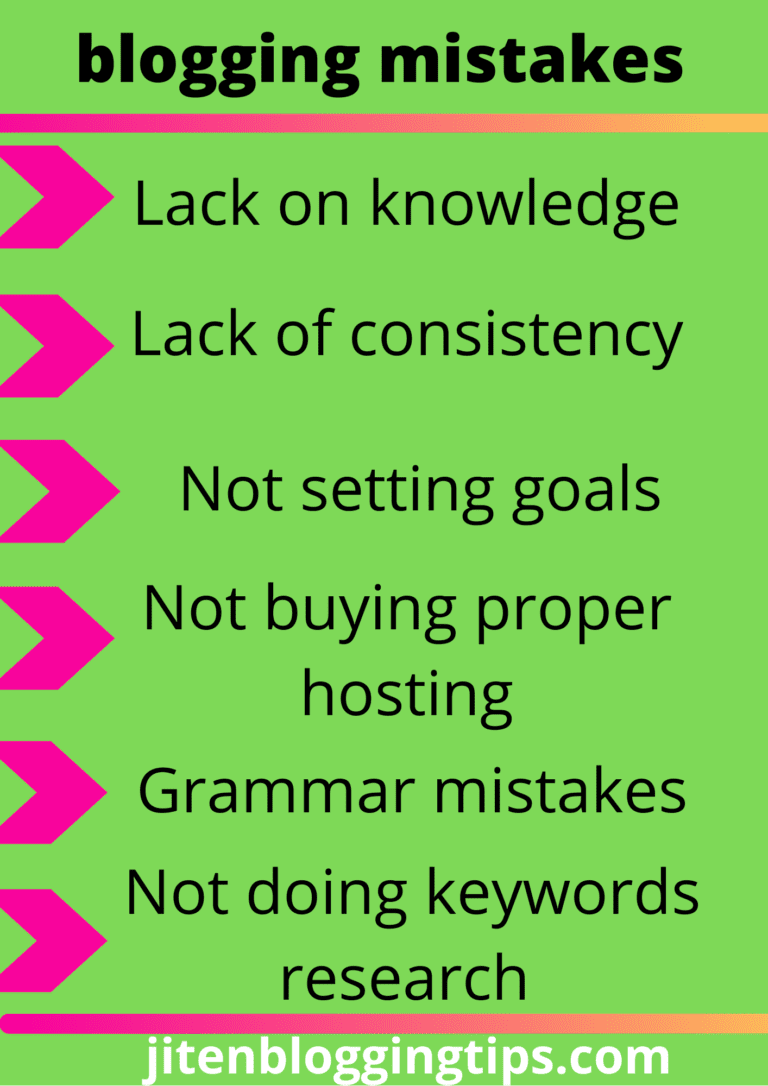
What are some common mistakes that I should avoid as a blogger new to India?
Five of the most common mistakes made by Indian bloggers are: selecting a niche before validating its commercial potential, switching to a new niche too early when results are slow, writing short articles rather than comprehensive content, ignoring SEO and hoping that social media traffic would be sufficient, and giving up on blogging before the first year mark, when most blogs start gaining traction. You are already ahead of most people who try blogging if you avoid these five mistakes.
How can I get paid for posting my blog in India?
Indian bloggers have other options to earn money besides their own WordPress blogs. They can also make money on Medium, LinkedIn Articles, Substack, and Substack Newsletters. For the highest earning potential over the long term, your self-hosted WordPress blog is the best option. You own your audience and your asset, and no platform can change their policies and remove your income over night.